When to See a Child Neurologist
It is important that a child is diagnosed and treated for epilepsy appropriately and the seizures are controlled as well as possible. In certain syndromes such as Infantile spasms, B-6 dependent seizures, and Dravet syndrome, early aggressive treatment may change the course of illness.
read moreUnderstanding Dravet Syndrome
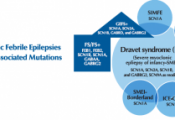
Information pertaining to: Genetics of Na+ channel epilepsy disorders, SCN1A Phenotypes: "To lump or split", Febrile Seizures (FS, FS+), Genetic (generalized)epilepsy with febrile seizures plus, FEFS+, Dravet Syndrome and Derivatives, Intractable childhood epilepsy with generalized...
read moreAbout Dravet Syndrome
Dravet syndrome Michelle Welborn, PharmD written for: National Organization for Rare Diseases March 2009 Synonyms of Dravet syndrome Severe Myoclonic Epilepsy in Infancy (SMEI) Polymorphic Epilepsy in Infancy (PMEI) Epilepsy with polymorphic seizures Disorder Subdivisions Febrile Seizures Genetic Epilepsy with Febrile Seizures Plus (GEFS+) – formerly Generalized Epilepsy with Febrile Seizures Plus Severe Myoclonic Epilepsy Borderline (SMEB) Intractable Childhood Epilepsy with Generalized Tonic Clonic Seizures (ICE-GTC) General...
read moreDravet syndrome Case Study
Dravet syndrome Pharmacotherapy Consultation 12/19/08 Michelle Welborn, PharmD Name: xxxxxxx Weight: 42 lbs (19 kg) S: Per mother: “My child currently weight 42 lbs, we tried the keto diet in winter – spring ’06 with no change in seizure control. The seizures he has been having recently are a combination of eye fluttering, chin tucking in to chest, drooling, with occasional myoclonics. He displays this activity for 10-15 sec and will continue about his routine, however, they are occurring every 3-5 minutes. Swiping...
read moreDravet Syndrome Patient Registries & Why We Need Them
An international Dravet syndrome registry will aid in the understanding of this rare epileptic encephalopathy. USF has many years experience in registry development, the design and development of collaborative research involving genotype-phenotype analyses, and serves as the Data and Technology Coordinating Center for the NIT-funded Rare Diseases Clinical Research Network, which includes the Consortium for the Clinical Investigations of Neurological Channelopathies, which exists to bring together physicians and patients for the sake of neurological channelopathies.
read moreWrong Diagnosis
Focal Epilepsy, Generalized Epilepsy, Lennox-Gastaut Diagnosis, Atypical Febrile Seizures and Epilepsy of Unknown Cause Beginning in Children < 1 year old: When to Suspect an SCN1A mutation related epilepsy A clinical study published in Brain 2007 (Harkin et al) reported from a multi-national study of 188 patients with epileptic encephalopathies (epilepsy with brain dysfunction) that 24% patients diagnosed with cryptogenic focal epilepsy and 22% patients diagnosed with cryptogenic generalized epilepsy had an SCN1A mutation , thus were...
read moreStiripentol Use in Children with Ds
Stiripentol Use in Children with Dravet Syndrome Data Source: Dravet Syndrome Patient Registry July 2008 Number of completed surveys: 22 Number of children using stiripentol: 8 Michelle Welborn, PharmD September 2008 This research was generated by the preliminary Dravet syndrome patient registry launched in 2008 and was submitted to be used for application of Orphan Drug Designation for stiripentol in the United States. Stiripentol was granted Orphan Drug Designation in November 2008. Current age of child: Race: How long has your child been...
read moreInternational Ion Channel Registry
What is the purpose of this registry? The International Ion Channel Epilepsy Patient Registry is a collaborative effort by the University of Michigan Department of Neurology and the Brain Institute at Miami Children’s Hospital to collect information from patients with ion channel epilepsies, beginning with Dravet syndrome (SMEI)* and related ion channel epilepsies (such as GEFS+, ICE-GTC, EMRF, or SMEB)*. The aim of the Registry is to collect data on as many patients as possible that will be analyzed by researchers and doctors around...
read moreCase Study SUDEP with Dravet
A case of SUDEP in a patient with Dravet syndrome with SCN1A mutation *Franc¸ois Le Gal, yChristian M. Korff, *Christine Monso-Hinard, zMichael T. Mund, *Michael Morris, *xAlain Malafosse, and {Thomas Schmitt-Mechelke *Genetic Medicine, University Hospitals of Geneva, Geneva, Switzerland; yPediatric Neurology, Pediatric Specialties Service, Child and Adolescent Department, University Hospitals of Geneva, Geneva, Switzerland; zInstitute of Legal Medicine, University of Zurich, Zurich, Switzerland; xDepartment of Psychiatry, University of...
read moreThe Sodium Channel and Morbidities Associated with Dravet Syndrome
The Sodium Channel and Morbidities Associated with Dravet Syndrome (SMEI) A focus of the works of Dr. Bill Catterall, Chair of Pharmacology, University of Washington School of Medicine Written by : Michelle Welborn, PharmD William Catterall, Ph.D.Professor and Chair of Pharmacology Research Affiliate, Center on Human Development and Disability wcatt@uw.edu 206-543-1925, 206-543-1970 University of Washington Box 357280 Seattle, WA 98195-7920 Dr. Catterall is interested in electrical signaling in the brain and peripheral nervous system,...
read moreDravet Syndrome Research & Associated Physicians
1) URL: http://www3.interscience.wiley.com/journal/119105547/abstract Associated physicians: Dr. Renzo Guerrini, Dr. Anna Belmonte: Institute of Child Neurology and Psychiatry, University of Pisa, Institute for Clinical Research Stella Maris Foundation, Calambrone, Pisa, Italy Dr. Charlotte Dravet , Dr. Pierre Genton: Centre Saint Paul, Marseille Dr.Anna Kaminska: Neuropédiatric, Hopital Saint-Vincent-de-Paul, Paris, France. Dr. Oliver Dulac: Neuropédiatric, Hopital Saint-Vincent-de-Paul, Paris, France, AND Institute of Child...
read moreSupport for Sibblings
In general, most children in families that include a child with a disability are likely to adapt and even blossom when their developmental needs are met in the family.
read moreProtective Helmets
Your child’s neurologist, physical therapist, or teacher may recommend a protective helmet to prevent head injuries during falls from seizures. The helmets are most often ordered through physical therapy departments and custom made for the child’s head. A couple of websites for protective...
read moreOrthotics for Intractable Epilepsy
Although orthotics are mentioned in many books available to families and professionals, there are few magazine articles or newspaper stories that mention these commonly used shoe inserts that do make a difference to children with epilepsy that also have low muscle tone or an abnormal gait or teens who have pain or discomfort due to walking differently during early childhood and beyond.
read moreDravet syndrome Represented at NIH/NINDS meeting
NINDS, August 26-27, 2010 Michelle Welborn, PharmD Intractable Childhood Epilepsy Alliance (ICE) Mission: The mission of ICE is to advance identification, understanding, and cure for ion channel and other genetic epilepsies through a strategic alignment of advocacy groups, industry, government, academia, parents, and investors internationally. ICE holds Dravet syndrome as the highest priority for disease modification and cure. Perspective on Anti-epileptogenesis (AEG): Despite the growing number of causes of epilepsy, 70% of cases are deemed...
read more
sending...